THE BAUHAUS IMPLUVIUM
LINCOLN, MA
Left: Edward Hicks, Peaceable Kingdom, 1830-32, oil on canvas, 17 7/8 x 23 7/8 in, The Metropolitan Museum of Art, New York.
Middle: Edward Hicks, The Falls of Niagara, 1825, oil on canvas, 31 1/2 x 38 in, The Metropolitan Museum of Art, New York.
Right: Photo of a raccoon eating dinner, 1960s. Photo taken by Ise Gropius from the living room window.
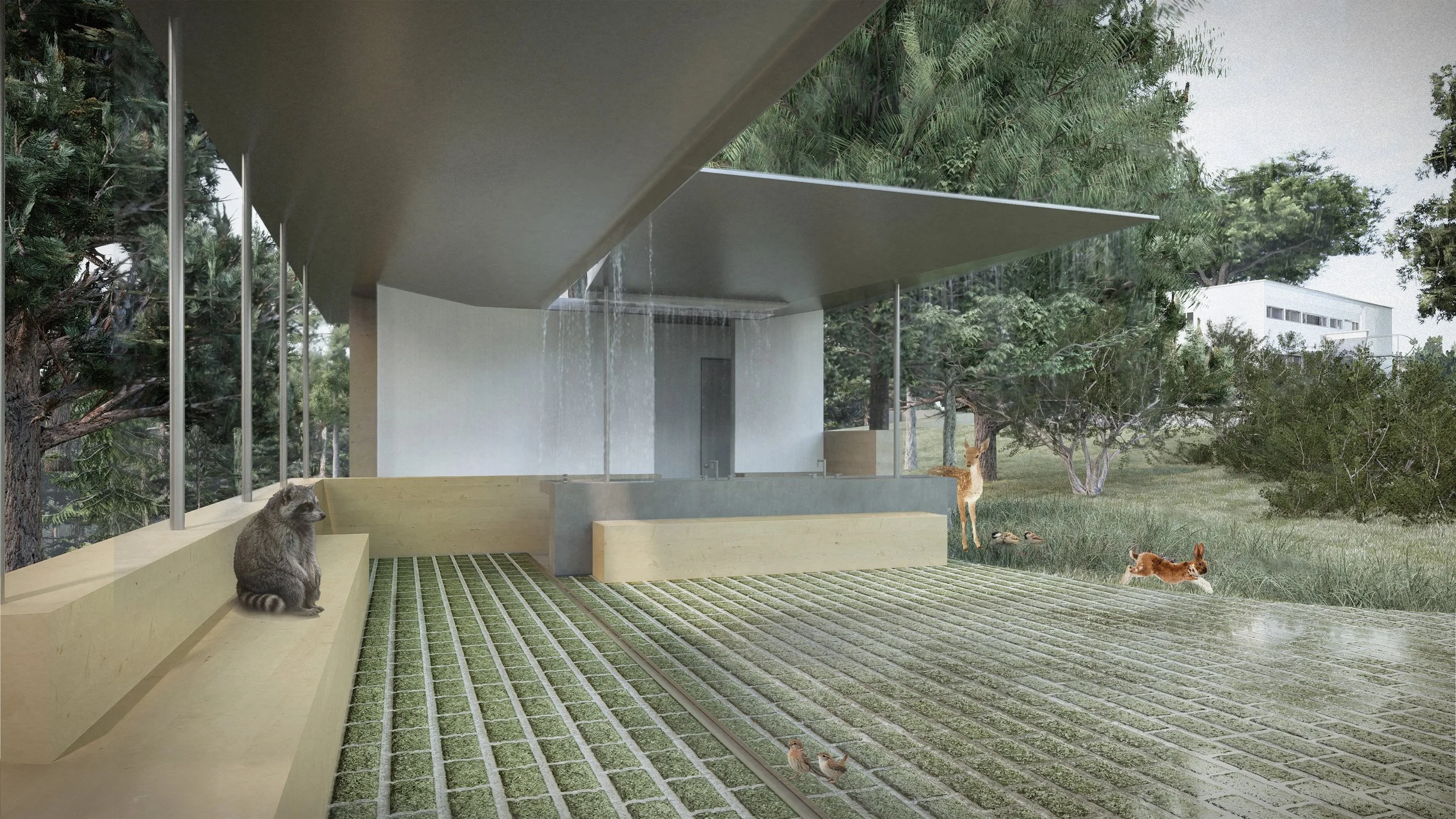
In the 1830s, the American artist and Quaker minister Edward Hicks painted “The Peaceable Kingdom” and “The Falls of Niagara.” Depicting a menagerie of animals coexisting in harmony, and the awareness of the water as a natural force, the artworks signaled a desire for peace between all forms of life. In the Anthropocene, this vision is more relevant than ever—not only as it calls for a rethinking of the human-nature relationship, but also because it encourages stewardship of and integration with Earth’s systems.
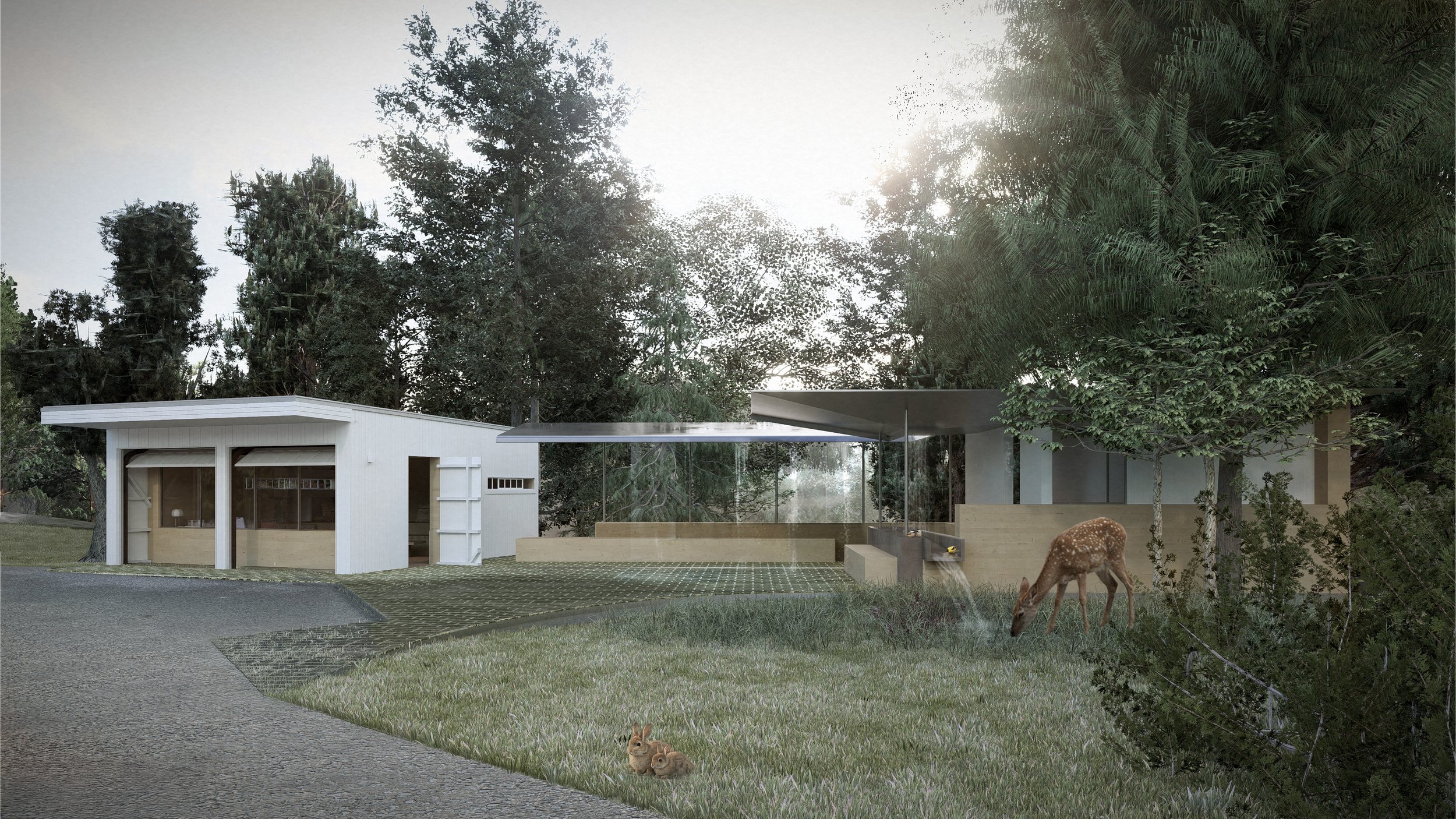
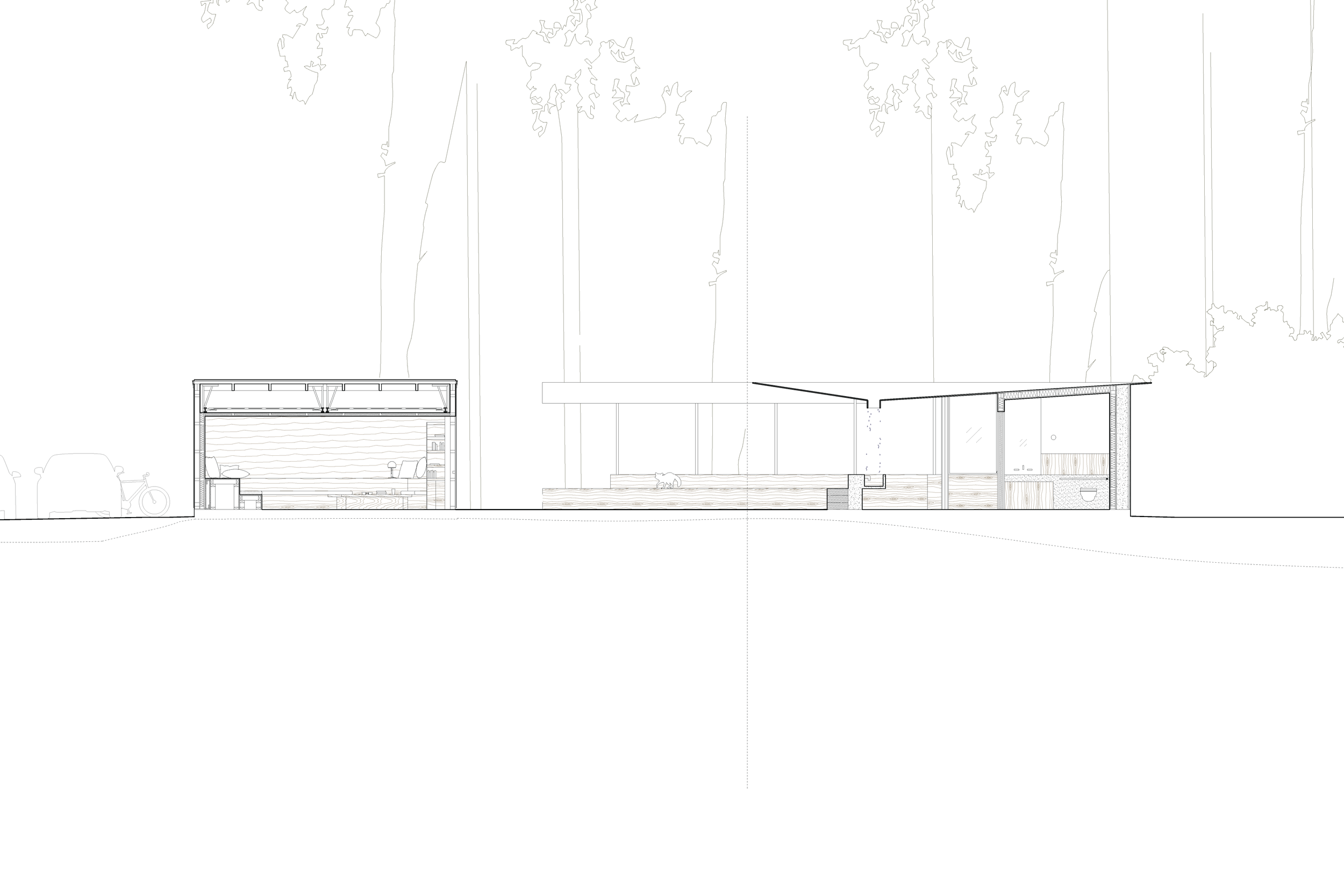
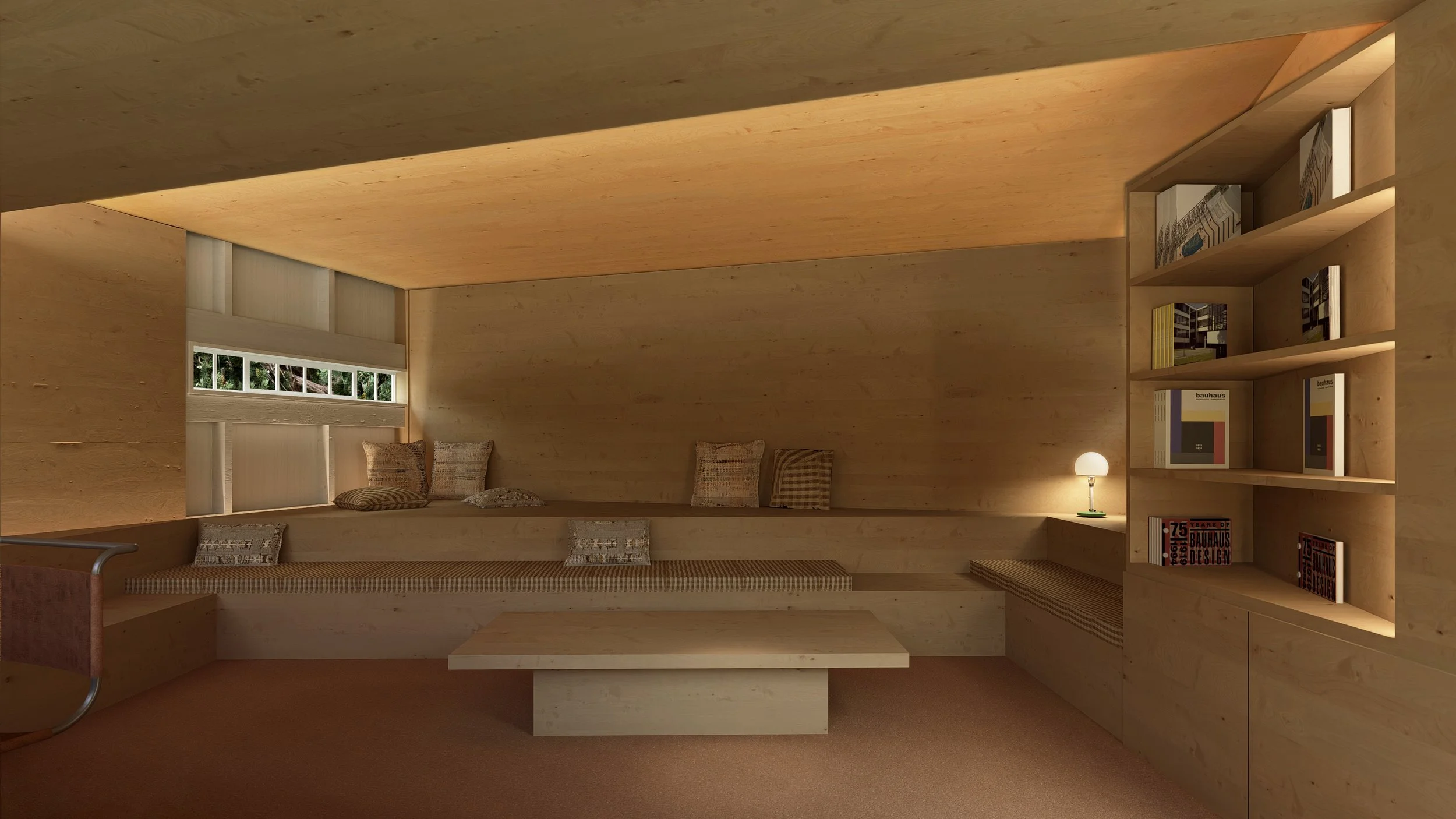
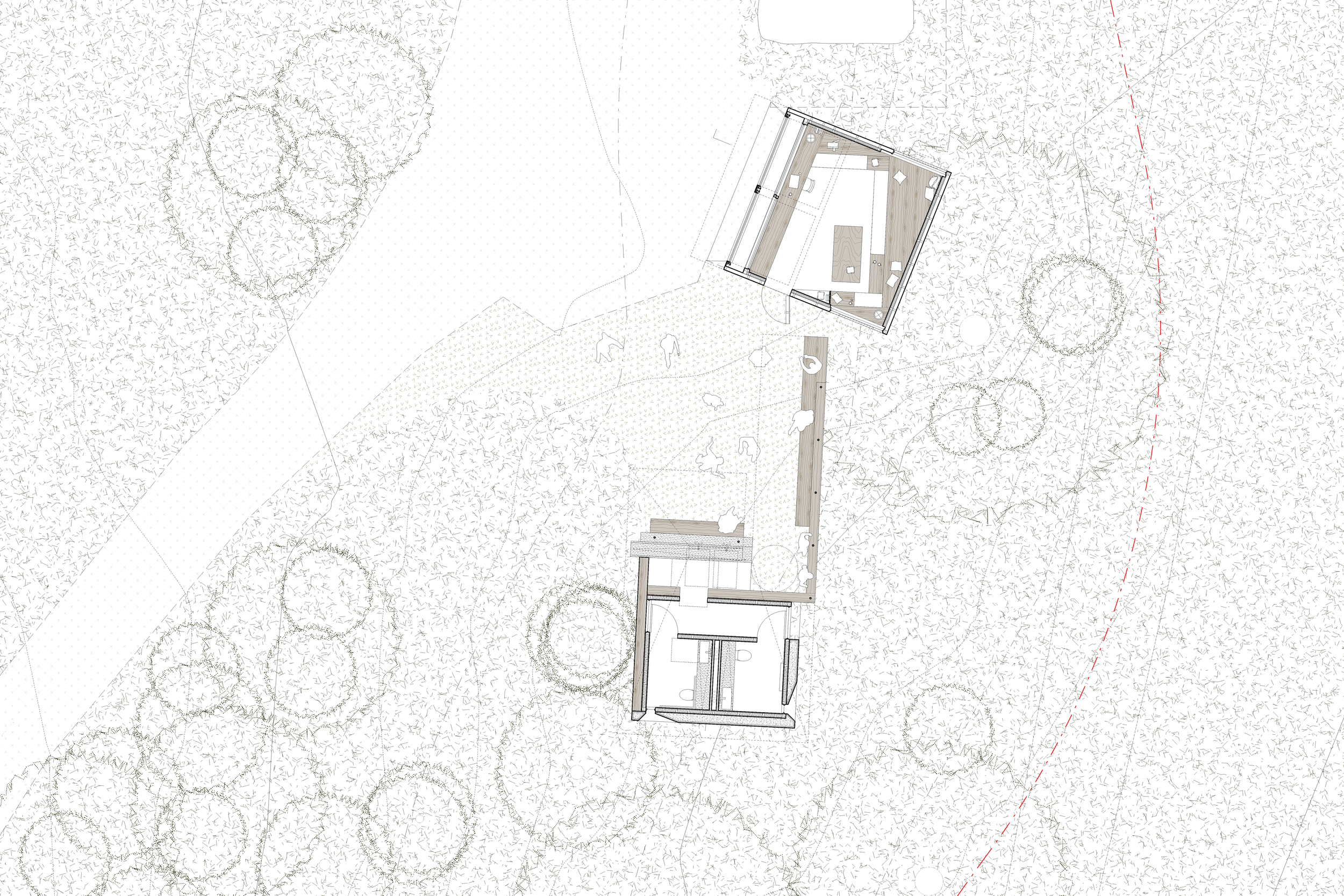
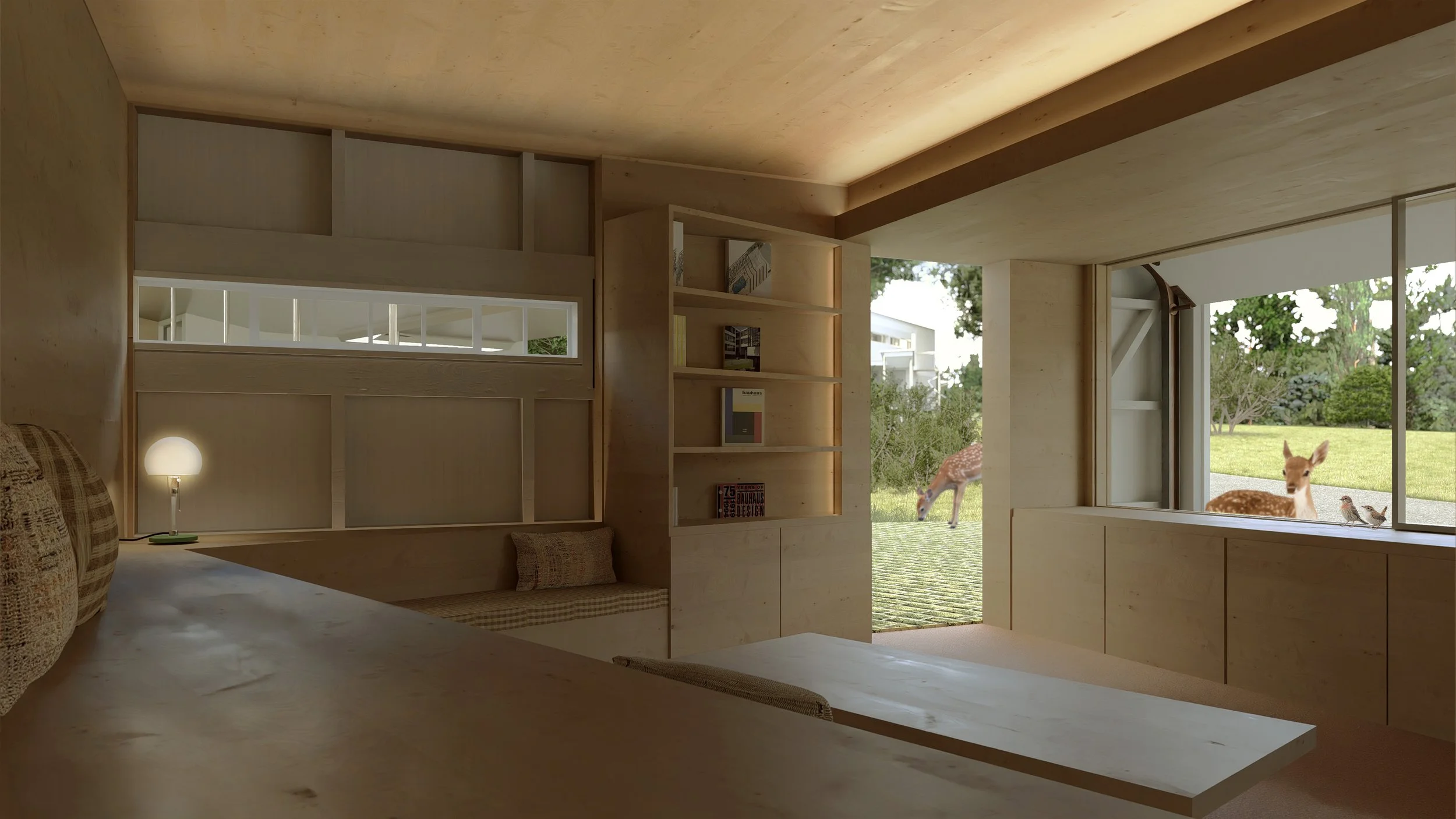
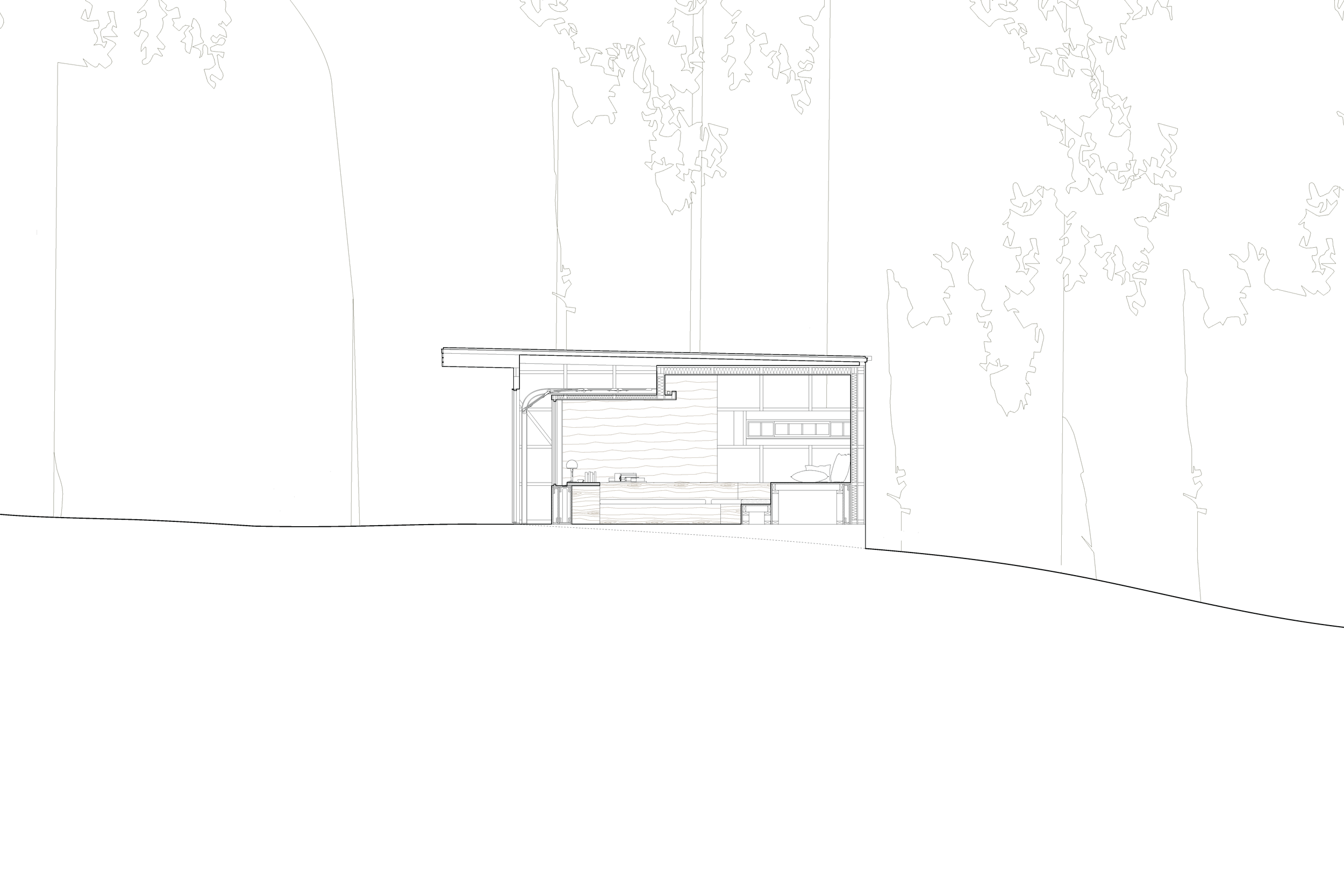
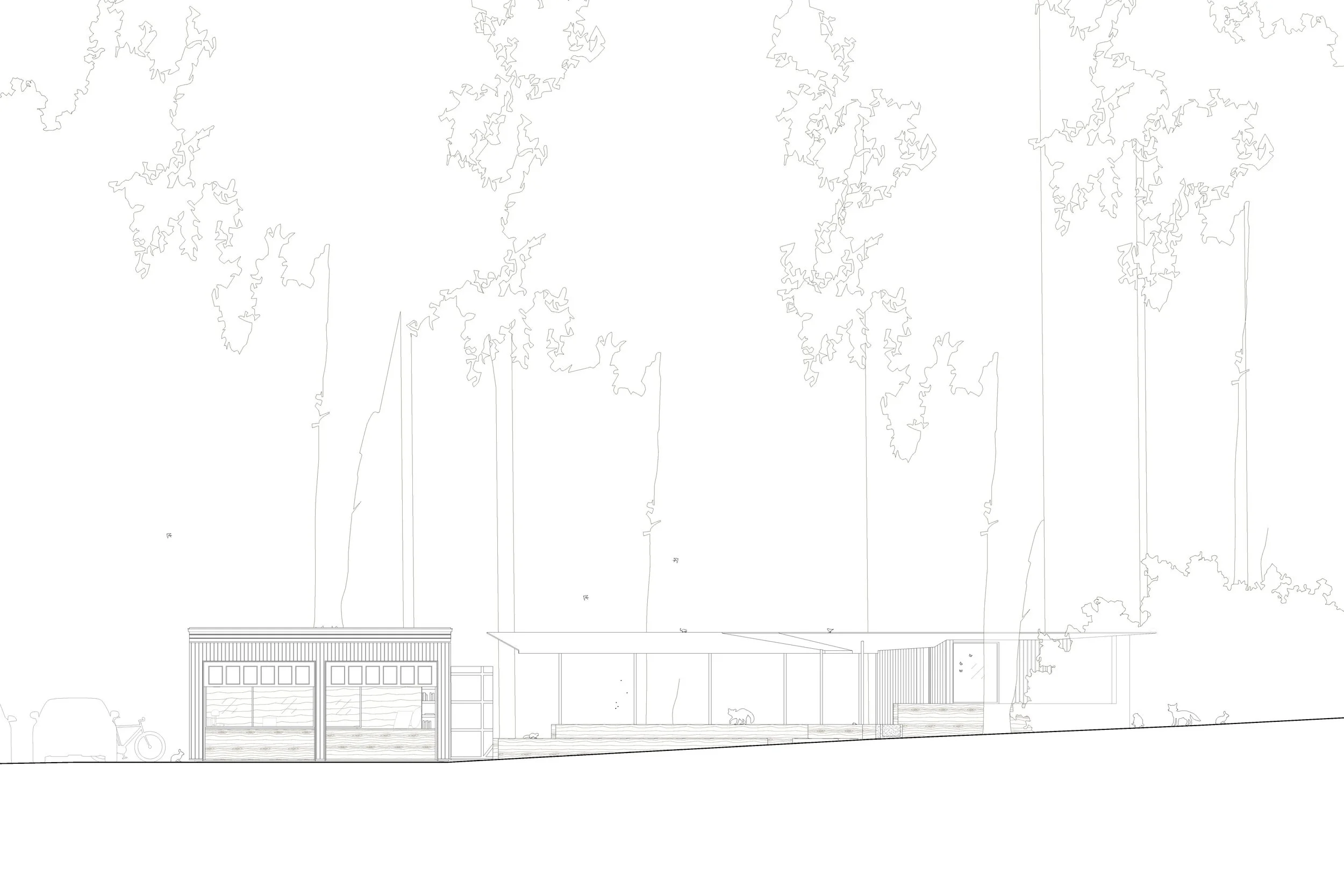
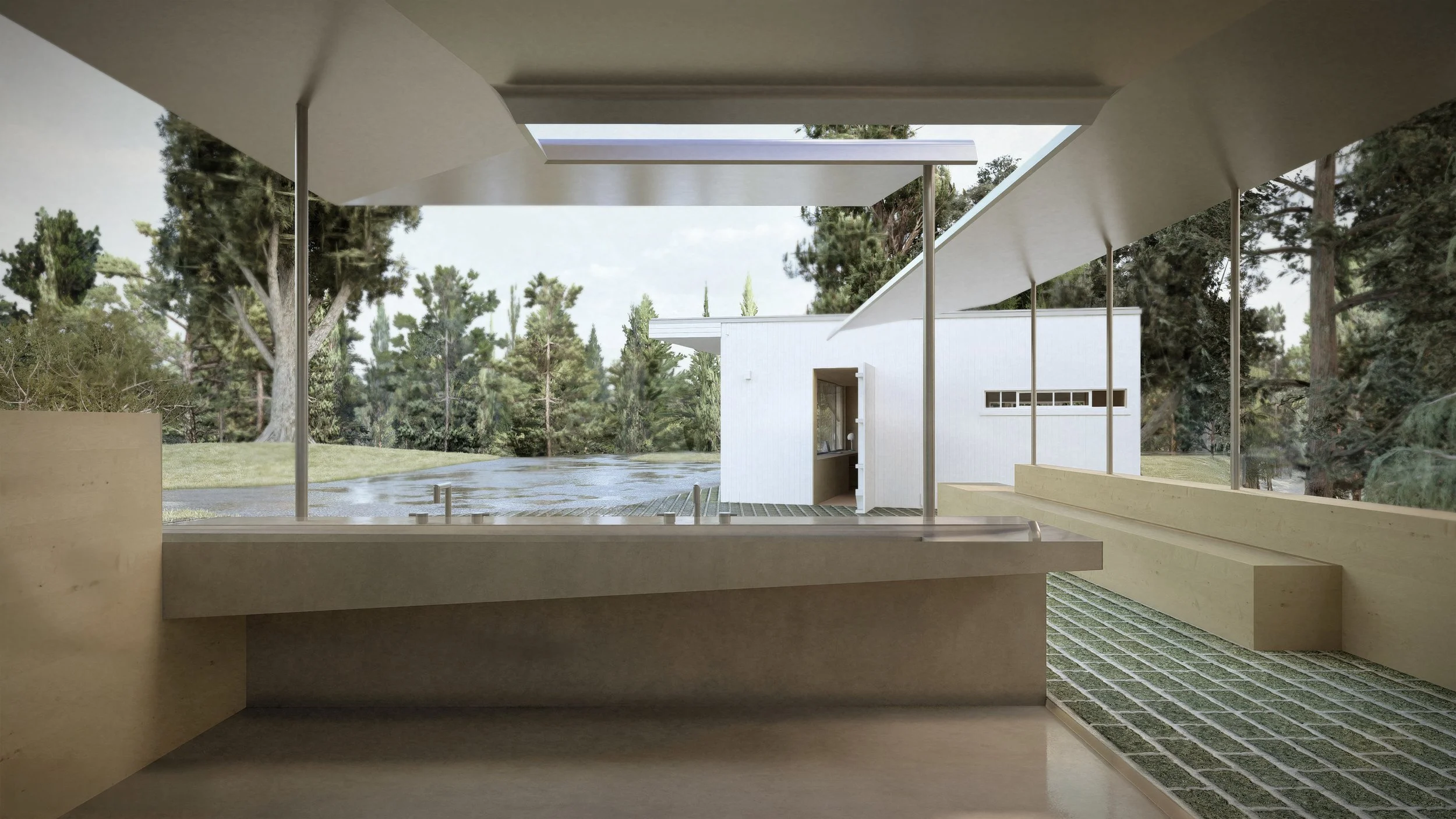
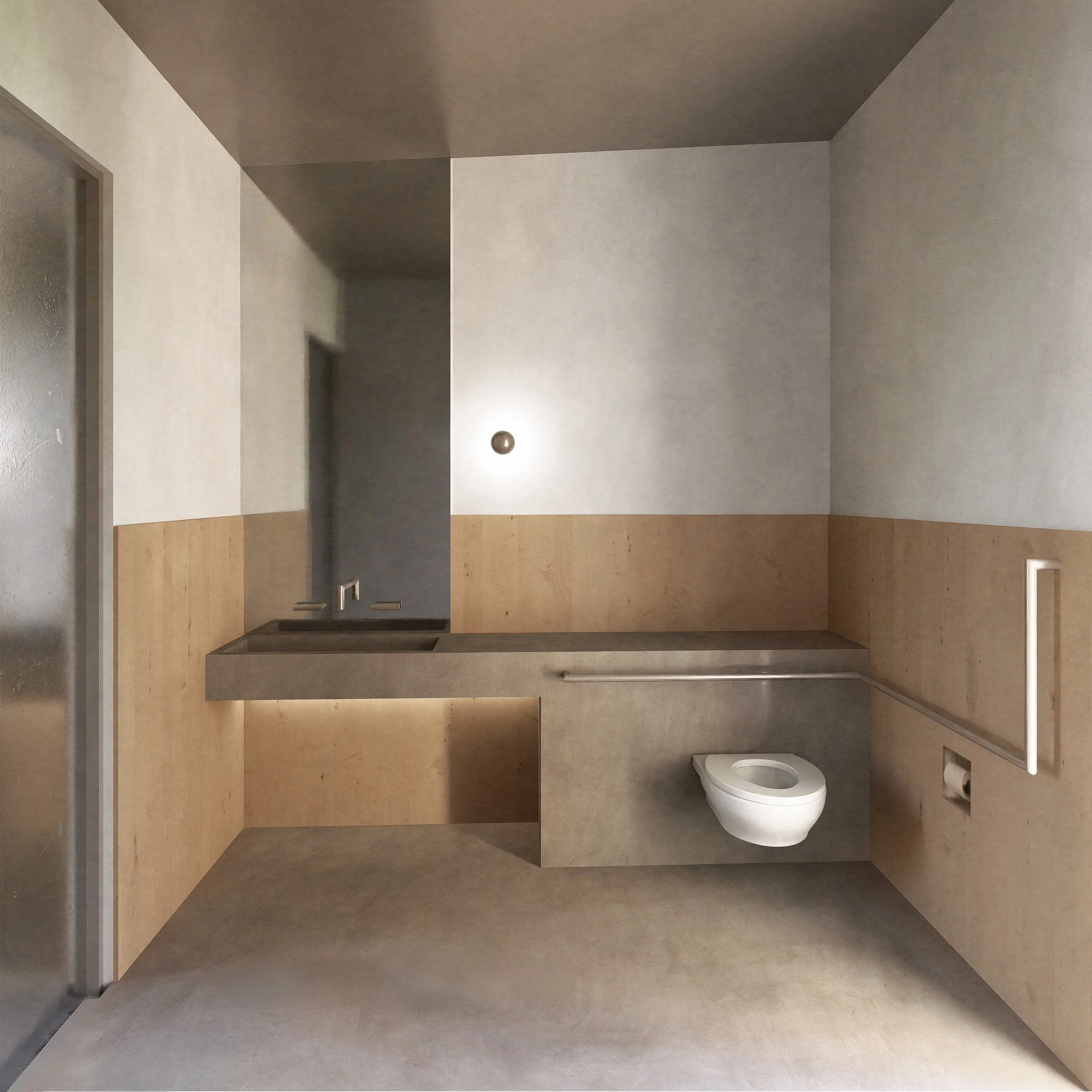
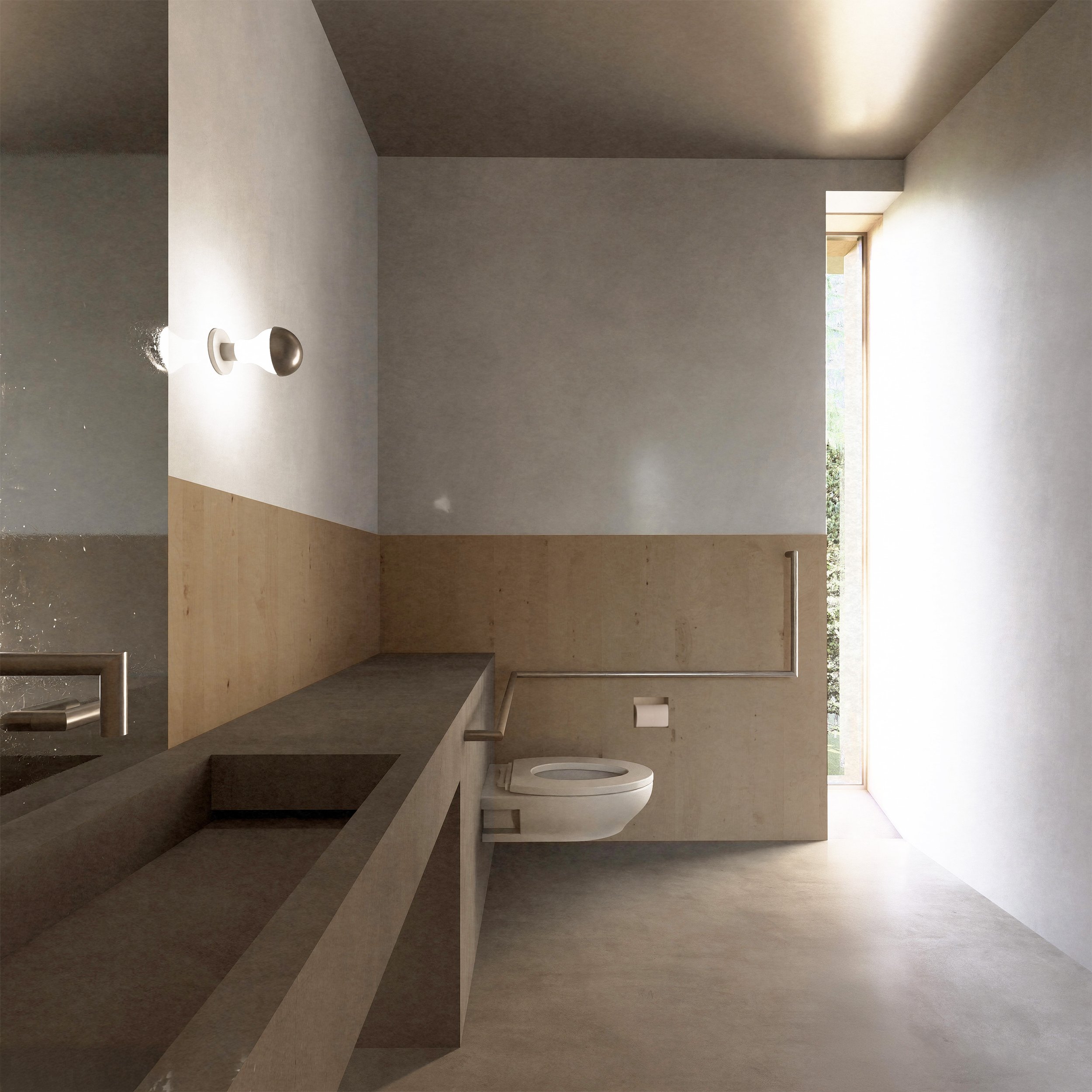
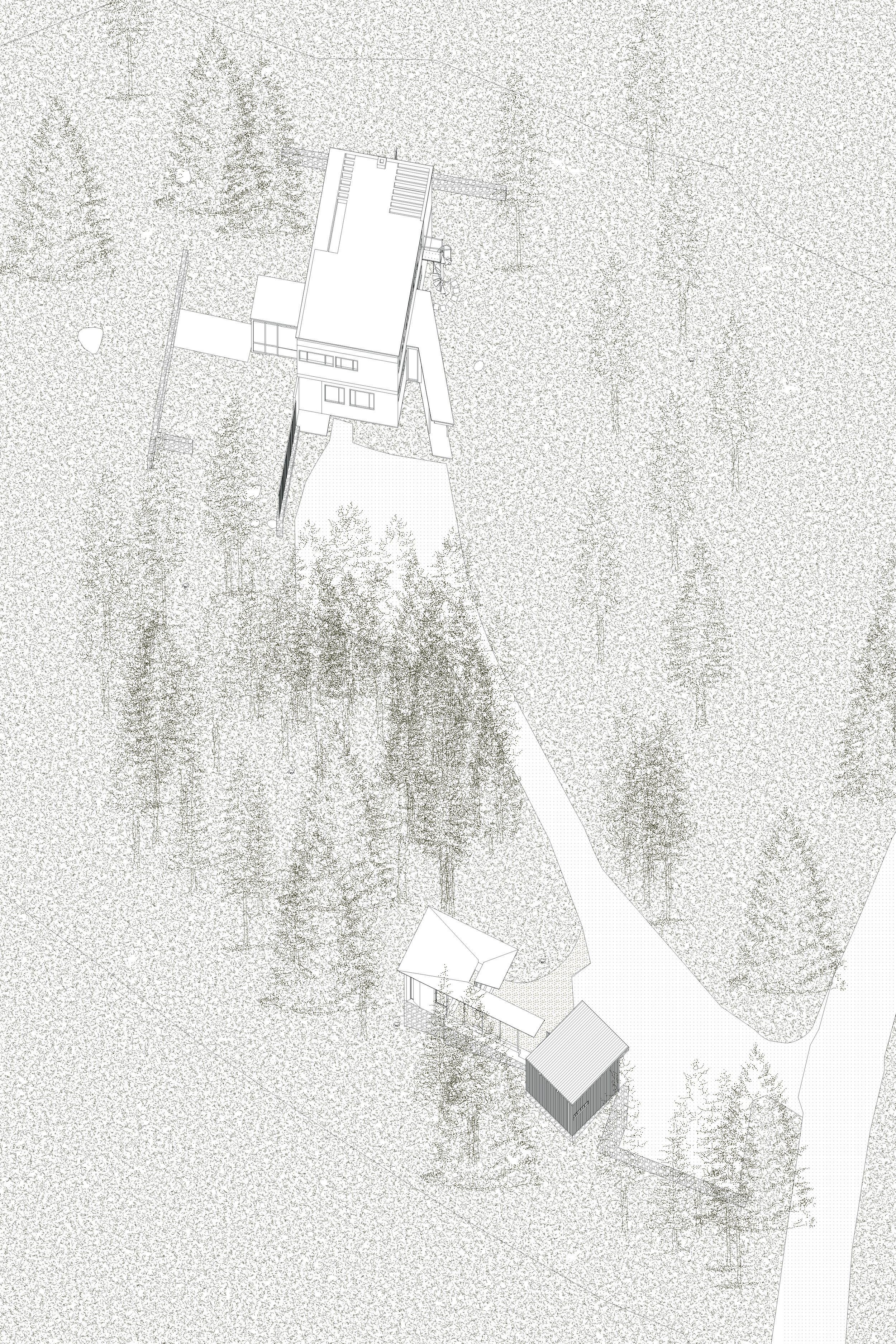
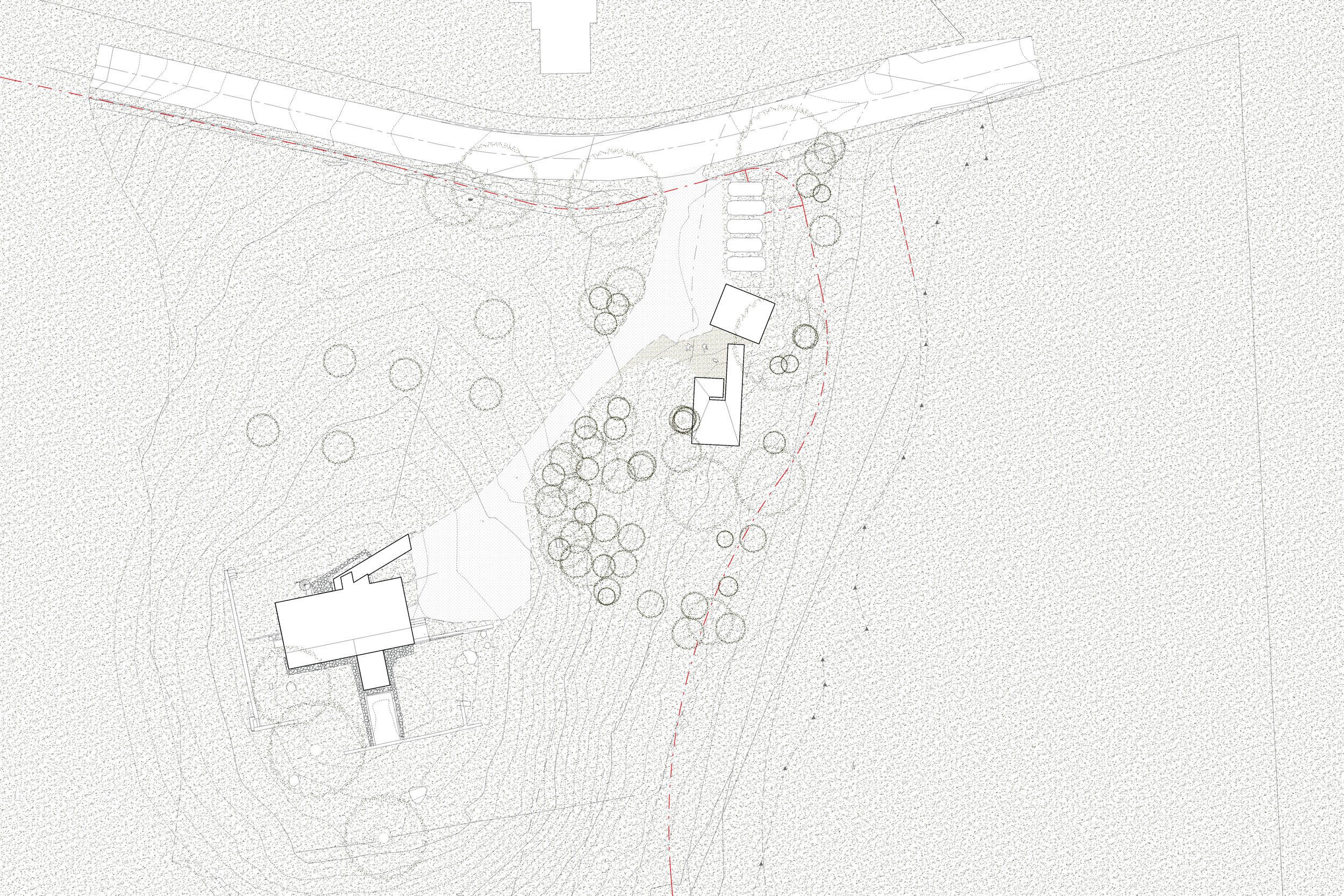
This unbuilt design for the “Bauhaus Bathroom” competition situated at the Gropius House in Lincoln, MA, becomes an expression of these aspirational ideals. To minimize impact on the historic buildings, the scheme re-adapts the existing garage as a visitor center, positioning the lavatories as a backdrop to the forest. The existing garage structure is lined with millwork. This wood liner is slightly rotated from the orthogonality of the garage shell to both heighten the clarity of its difference and connect it to the new geometry of the lavatory structure.
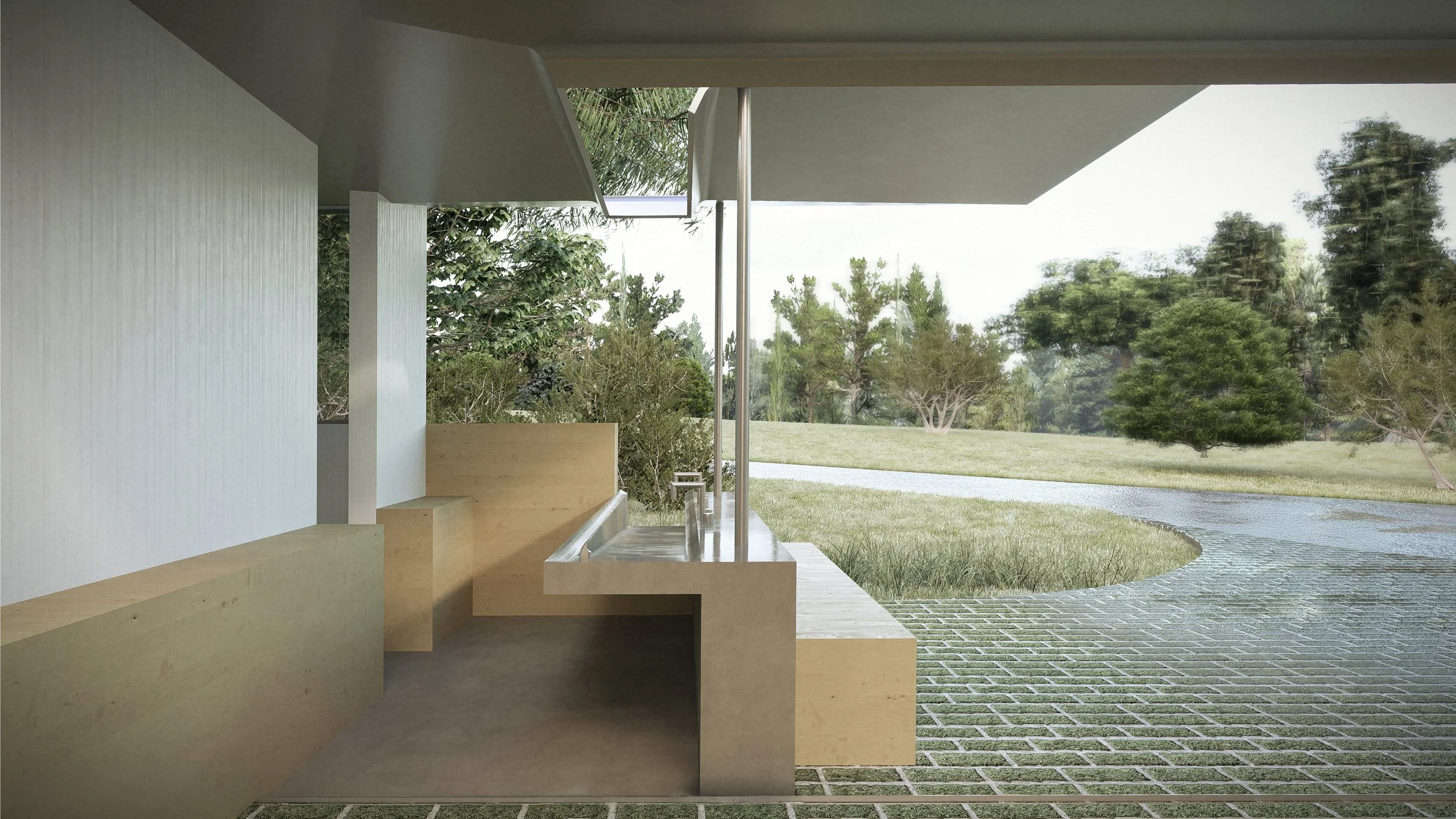
This geometrical extension forms a nautilus; spiraling walls and spaces intertwine across the project from inside to outside. A retaining wall and bench create an outdoor seating area where visitors await their tour of the Gropius House grounds. Its southern edge is framed by a basin which also serves as a freshwater drinking fountain, a bird bath, and an impluvium. A bent metal roof directs water into the impluvium, where it is collected and flows into adjacent rain gardens. The lavatories propose gray water reclamation from the sinks to become flushing water for the toilets. The scheme heightens ecological awareness of connected systems in which human engagement and environmental sensitivity are intertwined. The site, in harmony with nature, is celebrated and reflects a peaceable realm.